 Add to Chrome
 Add to Firefox
 Add to Edge
3D Foundation Model-Based Loop Closing for Decentralized Collaborative SLAM
Feb 02, 2026
Decentralized Collaborative Simultaneous Localization And Mapping (C-SLAM) techniques often struggle to identify map overlaps due to significant viewpoint variations among robots. Motivated by recent advancements in 3D foundation models, which can register images despite large viewpoint differences, we propose a robust loop closing approach that leverages these models to establish inter-robot measurements. In contrast to resource-intensive methods requiring full 3D reconstruction within a centralized map, our approach integrates foundation models into existing SLAM pipelines, yielding scalable and robust multi-robot mapping. Our contributions include: (1) integrating 3D foundation models to reliably estimate relative poses from monocular image pairs within decentralized C-SLAM; (2) introducing robust outlier mitigation techniques critical to the use of these relative poses; and (3) developing specialized pose graph optimization formulations that efficiently resolve scale ambiguities. We evaluate our method against state-of-the-art approaches, demonstrating improvements in localization and mapping accuracy, alongside significant gains in computational and memory efficiency. These results highlight the potential of our approach for deployment in large-scale multi-robot scenarios.

Multi-Robot Decentralized Collaborative SLAM in Planetary Analogue Environments: Dataset, Challenges, and Lessons Learned
Jan 28, 2026Decentralized collaborative simultaneous localization and mapping (C-SLAM) is essential to enable multirobot missions in unknown environments without relying on preexisting localization and communication infrastructure. This technology is anticipated to play a key role in the exploration of the Moon, Mars, and other planets. In this article, we share insights and lessons learned from C-SLAM experiments involving three robots operating on a Mars analogue terrain and communicating over an ad hoc network. We examine the impact of limited and intermittent communication on C-SLAM performance, as well as the unique localization challenges posed by planetary-like environments. Additionally, we introduce a novel dataset collected during our experiments, which includes real-time peer-to-peer inter-robot throughput and latency measurements. This dataset aims to support future research on communication-constrained, decentralized multirobot operations.
Revisiting the Learning Objectives of Vision-Language Reward Models
Dec 20, 2025Learning generalizable reward functions is a core challenge in embodied intelligence. Recent work leverages contrastive vision language models (VLMs) to obtain dense, domain-agnostic rewards without human supervision. These methods adapt VLMs into reward models through increasingly complex learning objectives, yet meaningful comparison remains difficult due to differences in training data, architectures, and evaluation settings. In this work, we isolate the impact of the learning objective by evaluating recent VLM-based reward models under a unified framework with identical backbones, finetuning data, and evaluation environments. Using Meta-World tasks, we assess modeling accuracy by measuring consistency with ground truth reward and correlation with expert progress. Remarkably, we show that a simple triplet loss outperforms state-of-the-art methods, suggesting that much of the improvements in recent approaches could be attributed to differences in data and architectures.
E-RGB-D: Real-Time Event-Based Perception with Structured Light
Dec 20, 2025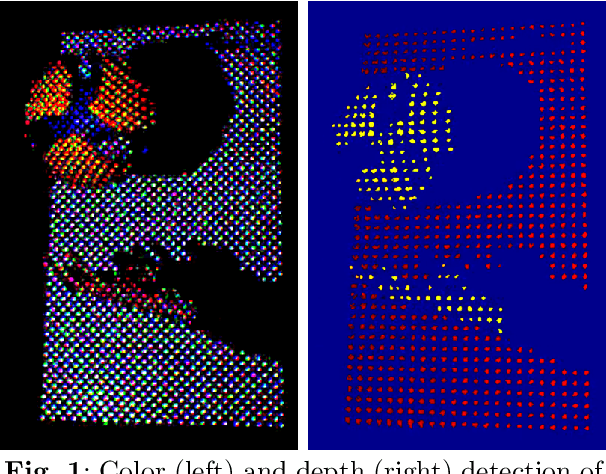
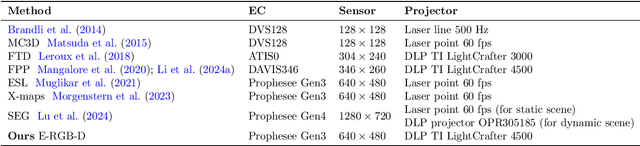
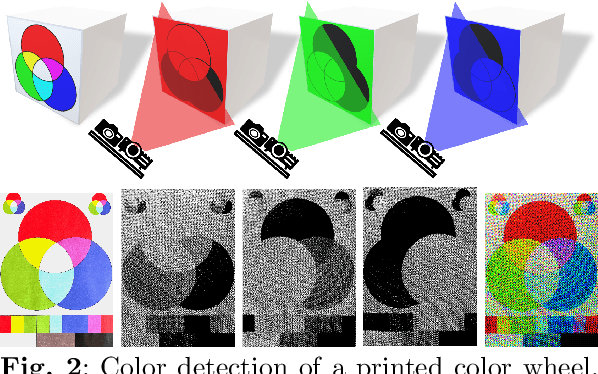
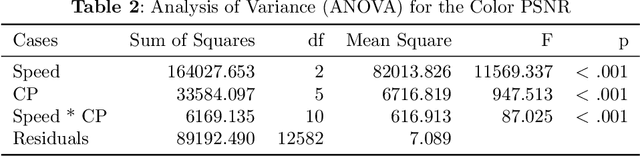
Event-based cameras (ECs) have emerged as bio-inspired sensors that report pixel brightness changes asynchronously, offering unmatched speed and efficiency in vision sensing. Despite their high dynamic range, temporal resolution, low power consumption, and computational simplicity, traditional monochrome ECs face limitations in detecting static or slowly moving objects and lack color information essential for certain applications. To address these challenges, we present a novel approach that integrates a Digital Light Processing (DLP) projector, forming Active Structured Light (ASL) for RGB-D sensing. By combining the benefits of ECs and projection-based techniques, our method enables the detection of color and the depth of each pixel separately. Dynamic projection adjustments optimize bandwidth, ensuring selective color data acquisition and yielding colorful point clouds without sacrificing spatial resolution. This integration, facilitated by a commercial TI LightCrafter 4500 projector and a monocular monochrome EC, not only enables frameless RGB-D sensing applications but also achieves remarkable performance milestones. With our approach, we achieved a color detection speed equivalent to 1400 fps and 4 kHz of pixel depth detection, significantly advancing the realm of computer vision across diverse fields from robotics to 3D reconstruction methods. Our code is publicly available: https://github.com/MISTLab/event_based_rgbd_ros
Guided by Guardrails: Control Barrier Functions as Safety Instructors for Robotic Learning
May 24, 2025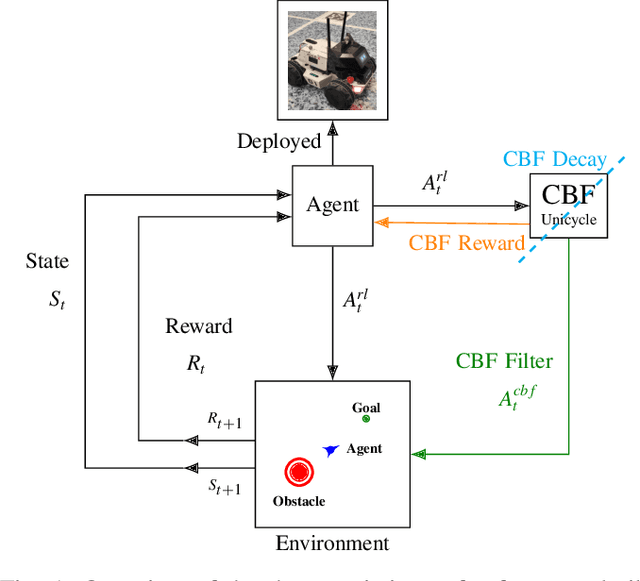
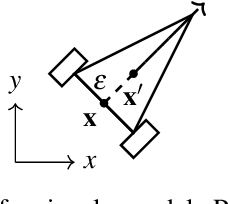
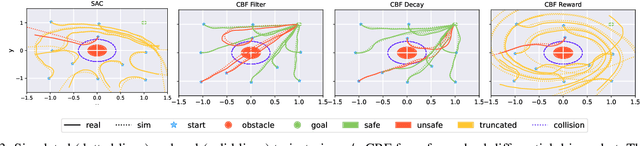
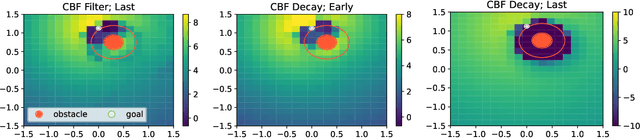
Safety stands as the primary obstacle preventing the widespread adoption of learning-based robotic systems in our daily lives. While reinforcement learning (RL) shows promise as an effective robot learning paradigm, conventional RL frameworks often model safety by using single scalar negative rewards with immediate episode termination, failing to capture the temporal consequences of unsafe actions (e.g., sustained collision damage). In this work, we introduce a novel approach that simulates these temporal effects by applying continuous negative rewards without episode termination. Our experiments reveal that standard RL methods struggle with this model, as the accumulated negative values in unsafe zones create learning barriers. To address this challenge, we demonstrate how Control Barrier Functions (CBFs), with their proven safety guarantees, effectively help robots avoid catastrophic regions while enhancing learning outcomes. We present three CBF-based approaches, each integrating traditional RL methods with Control Barrier Functions, guiding the agent to learn safe behavior. Our empirical analysis, conducted in both simulated environments and real-world settings using a four-wheel differential drive robot, explores the possibilities of employing these approaches for safe robotic learning.
An Addendum to NeBula: Towards Extending TEAM CoSTAR's Solution to Larger Scale Environments
Apr 18, 2025This paper presents an appendix to the original NeBula autonomy solution developed by the TEAM CoSTAR (Collaborative SubTerranean Autonomous Robots), participating in the DARPA Subterranean Challenge. Specifically, this paper presents extensions to NeBula's hardware, software, and algorithmic components that focus on increasing the range and scale of the exploration environment. From the algorithmic perspective, we discuss the following extensions to the original NeBula framework: (i) large-scale geometric and semantic environment mapping; (ii) an adaptive positioning system; (iii) probabilistic traversability analysis and local planning; (iv) large-scale POMDP-based global motion planning and exploration behavior; (v) large-scale networking and decentralized reasoning; (vi) communication-aware mission planning; and (vii) multi-modal ground-aerial exploration solutions. We demonstrate the application and deployment of the presented systems and solutions in various large-scale underground environments, including limestone mine exploration scenarios as well as deployment in the DARPA Subterranean challenge.
GNN-based Decentralized Perception in Multirobot Systems for Predicting Worker Actions
Jan 08, 2025


In industrial environments, predicting human actions is essential for ensuring safe and effective collaboration between humans and robots. This paper introduces a perception framework that enables mobile robots to understand and share information about human actions in a decentralized way. The framework first allows each robot to build a spatial graph representing its surroundings, which it then shares with other robots. This shared spatial data is combined with temporal information to track human behavior over time. A swarm-inspired decision-making process is used to ensure all robots agree on a unified interpretation of the human's actions. Results show that adding more robots and incorporating longer time sequences improve prediction accuracy. Additionally, the consensus mechanism increases system resilience, making the multi-robot setup more reliable in dynamic industrial settings.
Bridging Swarm Intelligence and Reinforcement Learning
Oct 23, 2024


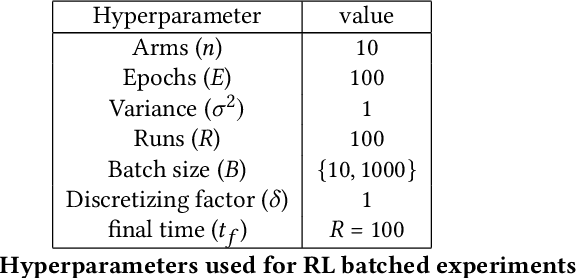
Swarm intelligence (SI) explores how large groups of simple individuals (e.g., insects, fish, birds) collaborate to produce complex behaviors, exemplifying that the whole is greater than the sum of its parts. A fundamental task in SI is Collective Decision-Making (CDM), where a group selects the best option among several alternatives, such as choosing an optimal foraging site. In this work, we demonstrate a theoretical and empirical equivalence between CDM and single-agent reinforcement learning (RL) in multi-armed bandit problems, utilizing concepts from opinion dynamics, evolutionary game theory, and RL. This equivalence bridges the gap between SI and RL and leads us to introduce a novel abstract RL update rule called Maynard-Cross Learning. Additionally, it provides a new population-based perspective on common RL practices like learning rate adjustment and batching. Our findings enable cross-disciplinary fertilization between RL and SI, allowing techniques from one field to enhance the understanding and methodologies of the other.
Evolution with Opponent-Learning Awareness
Oct 22, 2024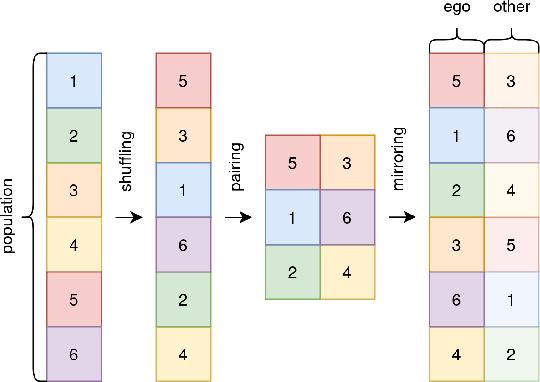
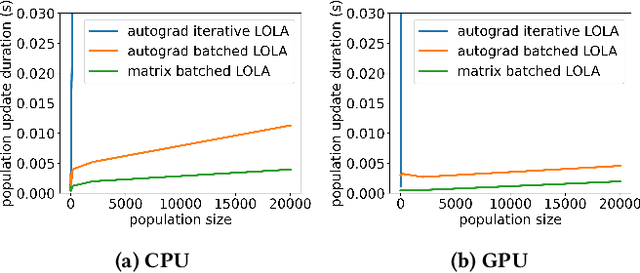
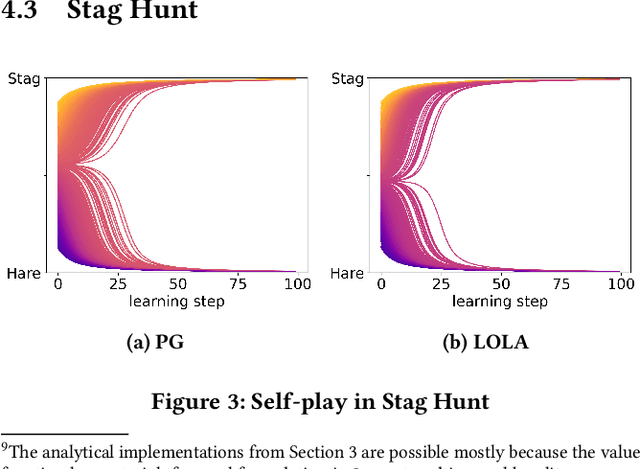
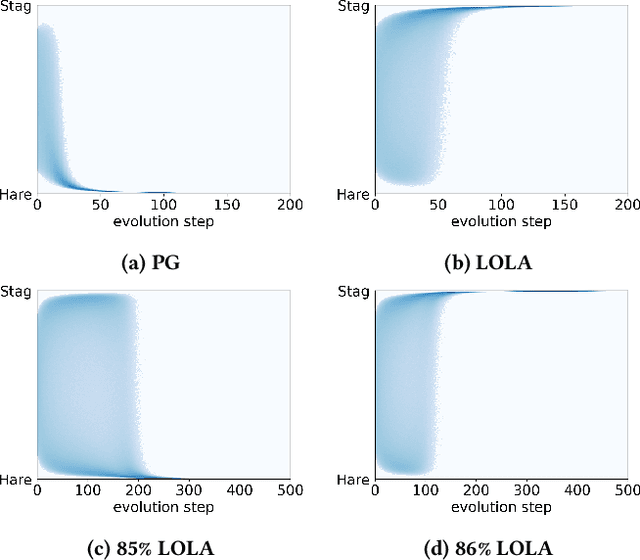
The universe involves many independent co-learning agents as an ever-evolving part of our observed environment. Yet, in practice, Multi-Agent Reinforcement Learning (MARL) applications are usually constrained to small, homogeneous populations and remain computationally intensive. In this paper, we study how large heterogeneous populations of learning agents evolve in normal-form games. We show how, under assumptions commonly made in the multi-armed bandit literature, Multi-Agent Policy Gradient closely resembles the Replicator Dynamic, and we further derive a fast, parallelizable implementation of Opponent-Learning Awareness tailored for evolutionary simulations. This enables us to simulate the evolution of very large populations made of heterogeneous co-learning agents, under both naive and advanced learning strategies. We demonstrate our approach in simulations of 200,000 agents, evolving in the classic games of Hawk-Dove, Stag-Hunt, and Rock-Paper-Scissors. Each game highlights distinct ways in which Opponent-Learning Awareness affects evolution.
BlabberSeg: Real-Time Embedded Open-Vocabulary Aerial Segmentation
Oct 16, 2024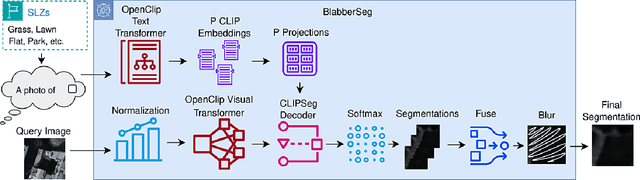
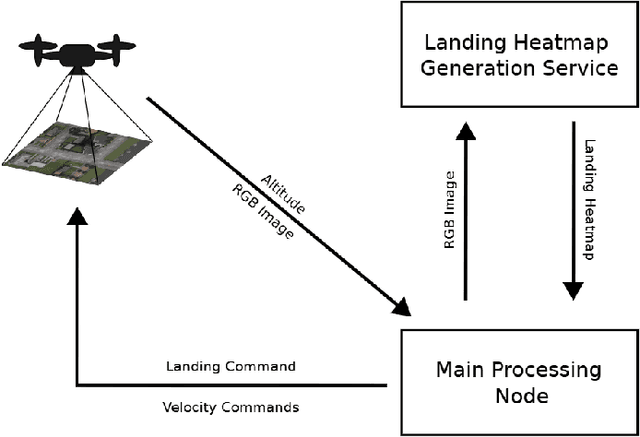
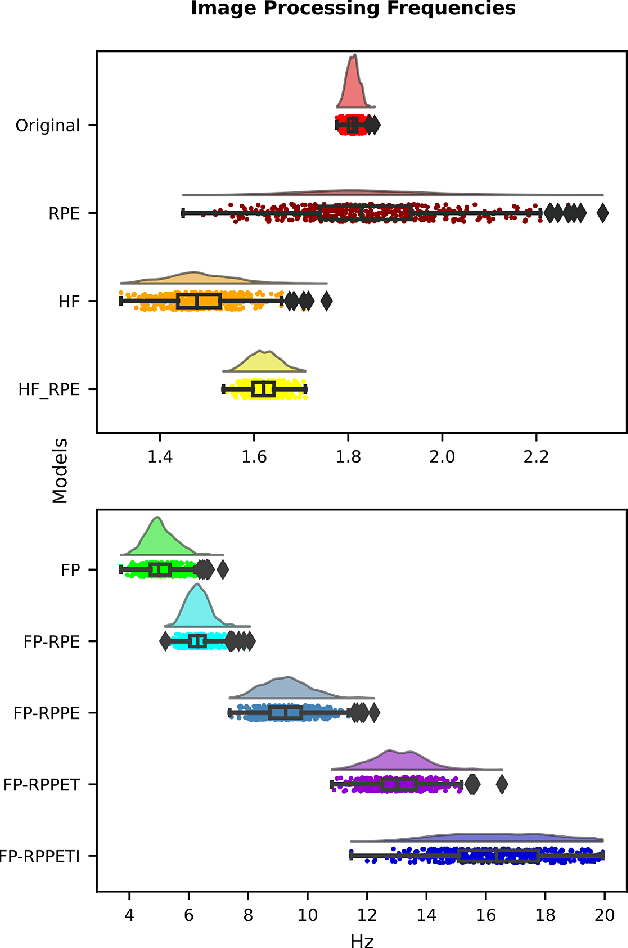
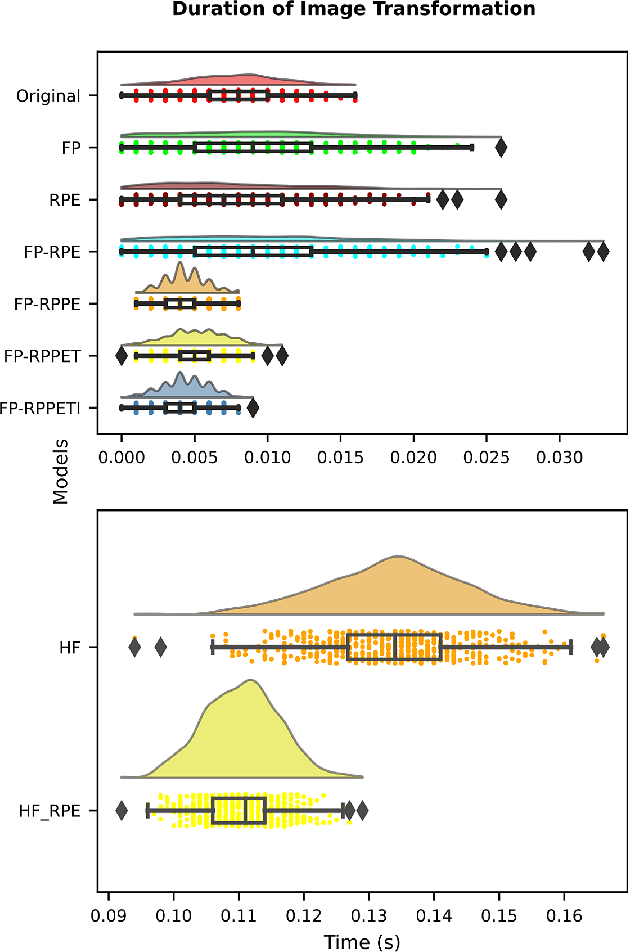
Real-time aerial image segmentation plays an important role in the environmental perception of Uncrewed Aerial Vehicles (UAVs). We introduce BlabberSeg, an optimized Vision-Language Model built on CLIPSeg for on-board, real-time processing of aerial images by UAVs. BlabberSeg improves the efficiency of CLIPSeg by reusing prompt and model features, reducing computational overhead while achieving real-time open-vocabulary aerial segmentation. We validated BlabberSeg in a safe landing scenario using the Dynamic Open-Vocabulary Enhanced SafE-Landing with Intelligence (DOVESEI) framework, which uses visual servoing and open-vocabulary segmentation. BlabberSeg reduces computational costs significantly, with a speed increase of 927.41% (16.78 Hz) on a NVIDIA Jetson Orin AGX (64GB) compared with the original CLIPSeg (1.81Hz), achieving real-time aerial segmentation with negligible loss in accuracy (2.1% as the ratio of the correctly segmented area with respect to CLIPSeg). BlabberSeg's source code is open and available online.